
ELAH™: Where Awareness Becomes Behavior Change
A gratitude-first system that combines experiential learning, behavioral science, and intentional action to help people build greater awareness, emotional intelligence, connection, and lasting behavioral skills.
Built for individuals, leaders, teams, and organizations who want more than information. They want change they can practice.

The Science Behind Data-Driven Measurable Behavioral Change
Permanent Change Proven Via Cadenced and Real-time Measurement.
The Neuroscience Behind ELAH™
From Knowing to Doing
ELAH™ was developed around a fundamental question:
Why can we understand what we want to change and still struggle to respond differently when the moment arrives?
Human behavior emerges from interactions among prior experience, attention, emotion, memory, expectation, physiological state, social context, and learned patterns of response.
ELAH™ is interested in the space between automatic reaction and intentional response.
Can experience increase our awareness of patterns as they occur? And can that awareness create greater opportunity for intentional behavioral choice?
Awareness creates options.
The Neuroscience Behind ELAH™
From Knowing to Doing
ELAH™ was developed around a fundamental question:
Why can we understand what we want to change and still struggle to respond differently when the moment arrives?
Human behavior emerges from interactions among prior experience, attention, emotion, memory, expectation, physiological state, social context, and learned patterns of response.
ELAH™ is interested in the space between automatic reaction and intentional response.
Can experience increase our awareness of patterns as they occur? And can that awareness create greater opportunity for intentional behavioral choice?
Awareness creates options.
One System. Four Connected Parts.
ELAH™
A framework centered on gratitude, awareness, balance, and intentional choice.
ELAHeqOS™
Organizes ELAH™ principles into an approach that can be applied in everyday life.
Experiential NeuroLearning™
Moves concepts beyond intellectual understanding and into lived experience.
ExEm NeuroIntegration™ (XMNI)
Supports reflection, practice, and integration of awareness and intentional behavior.
What We Think May Be Happening
Our scientific inquiry focuses on several interacting processes:
Neurobiological Response
Experiential NeuroLearning™
Awareness and metacognition
Prediction and experiential updating
Neuroplasticity and NeuroIntegration
Pattern recognition and interruption
Neurobiological Response
Emotionally meaningful experiences, particularly those involving gratitude and unexpected human connection, may produce a measurable neurobiological response.
Our Hypothesis: Certain experiential events may initiate a neurobiological cascade that creates a temporary state of heightened awareness, openness, or receptivity to learning.
Rather than assuming which neurochemical systems are responsible, our research asks: What actually happens during this experience, how long does it last, and does it create a measurable window for learning and behavioral change?
Neuroplasticity and Neuro Integration
The nervous system retains the capacity to adapt through experience and learning.
Our Hypothesis: Repeated recognition, interruption, intentional choice, and enactment of an alternative response may progressively strengthen the accessibility of that response.
The central question is not simply whether someone can choose differently once. It is:
At what point does the new response become sufficiently integrated that it begins competing successfully with, and potentially becomes more readily accessible than, the previous automatic response?
That transition is one of the central processes we intend to investigate as Neuro Integration.
Experiential NeuroLearning™
Information can explain a concept. Experience gives the nervous system something new to encounter.
An emotionally meaningful lived experience may challenge an existing expectation, assumption, or learned response by providing new experiential evidence.
Our Hypothesis: Experiential NeuroLearning™ may help bridge the gap between intellectually understanding a pattern and being able to recognize and respond differently to that pattern when it appears in real life.
Awareness, Pattern Recognition, and Choice
Many behavioral responses occur rapidly and automatically. Metacognitive, emotional, and interoceptive awareness may allow individuals to recognize aspects of those patterns as they are occurring.
Our Hypothesis: Increased awareness may create greater opportunity to recognize an automatic pattern, interrupt it, perceive alternative responses, and make a more intentional choice.
This is the space we describe conceptually as the “0.25 seconds of choice.” The 0.25 seconds is a conceptual framework to be investigated, not an established neurological threshold.
Experiential Updating
Awareness alone may not be sufficient to produce lasting behavioral change.
When an existing belief, expectation, or behavioral pattern is met with a meaningful lived experience that contradicts it, the individual receives new experiential information.
Our Hypothesis: Repeated experiences that challenge established predictions may allow previously learned interpretations and responses to be updated rather than simply intellectually understood.
In everyday language, this is what we mean when we talk about “rewriting the story.” Scientifically, we are asking whether new experiential evidence changes the accessibility and expression of established learned patterns.
The Model We Are Testing
And importantly, this is the model we are testing, not a mechanism we are claiming has already been demonstrated.
The Model We Are Testing
And importantly, this is the model we are testing, not a mechanism we are claiming has already been demonstrated.
ELAH™ starts somewhere traditional equations don't: at the equal sign

What Happens Between Two Strangers?
One of our most compelling research questions begins with something remarkably simple:
Two people who do not know one another meet.
They enter an intentional interaction involving presence, attention, gratitude, emotional engagement, vulnerability, empathy, and connection.
What happens neurologically, physiologically, emotionally, and behaviorally during that interaction?
The Neurochemical Cascade Hypothesis
Human connection involves interacting neural, autonomic, endocrine, physiological, and neurochemical systems.
We hypothesize that an emotionally meaningful interaction between strangers may engage a coordinated neurochemical and physiological cascade associated with social connection, emotional salience, attention, reward, stress regulation, learning, and memory.
Could this influence how an experience is perceived, encoded, remembered, and ultimately integrated into behavior?
That is a hypothesis we want to investigate.
We have not demonstrated that ELAH™ produces a specific neurochemical response. Establishing those mechanisms would require research capable of directly measuring the relevant biological variables.
Why Are We Studying This?
ELAH™ did not begin in a laboratory.
It began with lived experience.
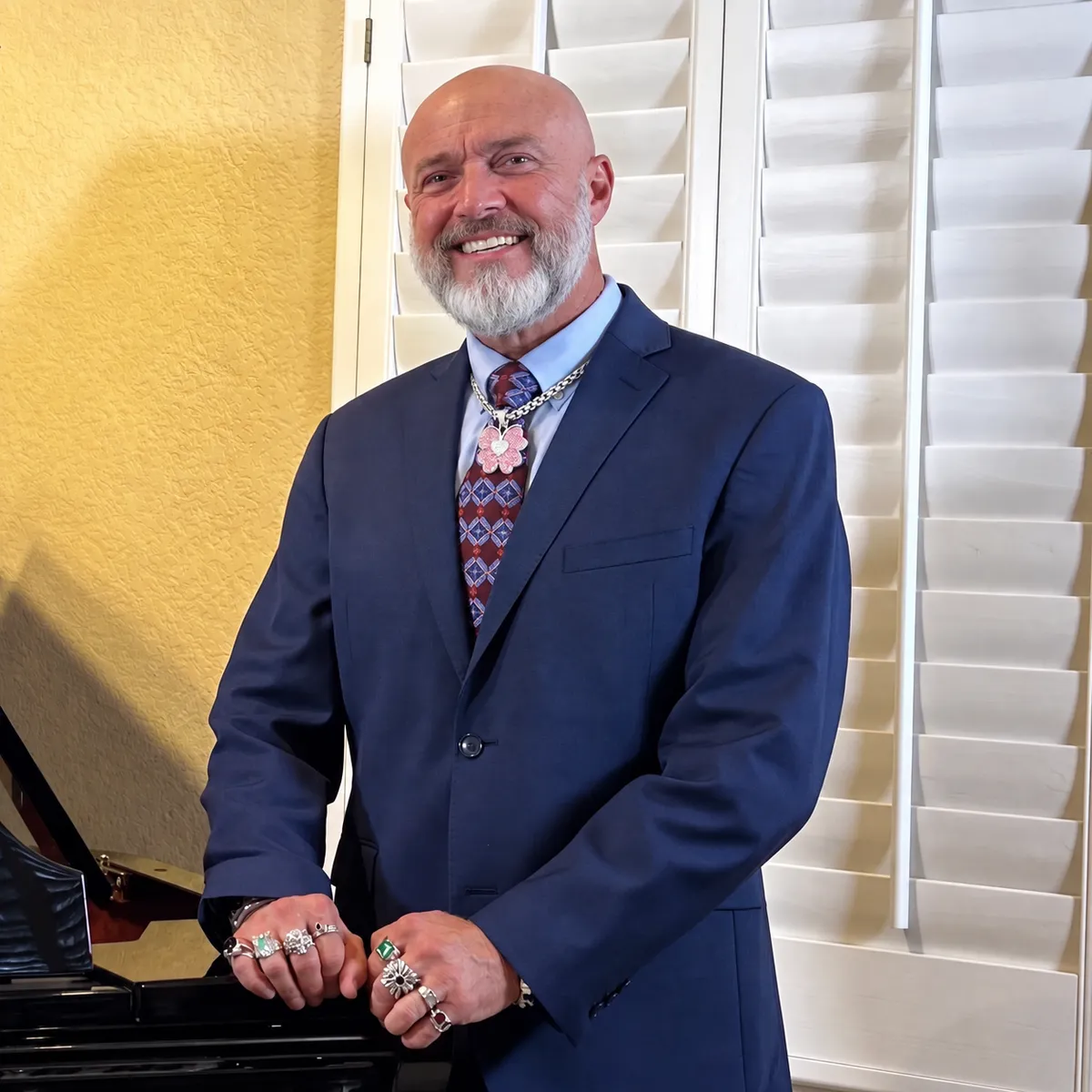
Founder Thayne Martin describes a profound personal transformation involving gratitude, awareness, human connection, and his own patterns of behavior. As he shared these experiences with others, he began observing meaningful responses that raised a larger question:
What is actually happening?
“When I started seeing other people have their own experiences, the question became bigger than my story. If something here is helping people see themselves and each other differently, I believe it deserves to be understood.”
— Thayne Martin, Founder
Those experiences generated curiosity.
Curiosity generated hypotheses.
And those hypotheses led us to research.
“My responsibility as a researcher isn't to prove ELAH™ works. It's to ask what we're actually observing. What changed? Can we measure it? Does it persist? What mechanisms could explain it? Then we allow the data to answer us.”
— Jay Johnson, VP of Research & Neuroscience Strategy

Why Are We Studying This?
ELAH™ did not begin in a laboratory.
It began with lived experience.
Founder Thayne Martin describes a profound personal transformation involving gratitude, awareness, human connection, and his own patterns of behavior. As he shared these experiences with others, he began observing meaningful responses that raised a larger question:
What is actually happening?
“When I started seeing other people have their own experiences, the question became bigger than my story. If something here is helping people see themselves and each other differently, I believe it deserves to be understood.”
— Thayne Martin, Founder
Those experiences generated curiosity.
Curiosity generated hypotheses.
And those hypotheses led us to research.
“My responsibility as a researcher isn't to prove ELAH™ works. It's to ask what we're actually observing. What changed? Can we measure it? Does it persist? What mechanisms could explain it? Then we allow the data to answer us.”
— Jay Johnson, VP of Research & Neuroscience Strategy

The Molecular Side of the Story
At the biological level, emotionally meaningful experiences influence how the brain encodes and reinforces learning.
Systems involving acetylcholine, dopamine, oxytocin, and vasopressin play important roles in attention, reward learning, social bonding, and memory consolidation.
eXeM NeuroIntegration™ is designed to engage these systems through focused attention, emotionally meaningful interaction, and positive social reinforcement.
We are scheduled to begin multiple clinical trials in late 2026 and will publish the independently reviewed results professionally.
Why Could This Matter?
Because the underlying question is larger than ELAH™.
We have unprecedented access to information about mental health, relationships, communication, emotional regulation, stress, and well being.
Yet knowing more does not necessarily mean behaving differently.
We can understand empathy without practicing it.
We can recognize our patterns and continue repeating them.
We can understand emotional regulation and still react impulsively.
What helps knowledge become lived behavior?
And perhaps just as importantly: What happens when genuine human connection becomes part of that learning?
If greater awareness makes automatic patterns more observable while they are occurring, another possibility becomes available:
Choice.
Not permanent happiness.
Not the elimination of difficult emotions.
Greater awareness and greater behavioral flexibility in the presence of emotion.
Broader Scientific Relevance
That question has potential relevance to neuroscience, behavioral science, social neuroscience, psychological well being, and our broader understanding of human connection.
We are not claiming ELAH™ treats or cures mental illness.
We are asking whether studying these experiences might contribute useful knowledge to how we understand awareness, regulation, connection, and behavior.
From Hypothesis to Research
We are no longer simply discussing whether ELAH™ should be studied.
The research protocol has been developed, and we are preparing to begin prospective study.
Our research will examine participant experiences and outcomes over time, with particular interest in:
We want to understand the following questions:
Measurement Before Claims
Measurement is how we determine whether change occurs, its magnitude, and whether it persists.
Our approach is simple:
Not the other way around.
The Research Is Beginning
We believe the intersection of experiential learning, metacognitive awareness, emotional salience, gratitude, human connection, and intentional behavioral practice presents a compelling area for scientific investigation.
Could it ultimately contribute something important to neuroscience or our understanding of psychological well being?
But the evidence has to earn that conclusion.

Neuroscience Strategy
I believe there is something important happening here. But belief is where my curiosity begins, not where the science ends. We've developed the protocol because I want to know. Now we measure it, follow it over time, and let the evidence tell us what is actually happening.
Ultimately, we're asking a question much larger than any one program:
What helps human beings become more aware, more intentional, more behaviorally flexible, and more connected to one another?
We believe that question is worth pursuing.
Interested in the Deeper Science?
The science matters. What people do differently afterward matters more.
Two Paths. One Purpose.
One ELAH™ foundation. Two ways to begin.

Experience ELAH™ personally and begin practicing the system in everyday life.

Bring ELAH™ experiential behavioral learning to your leaders, teams or organization.
Two Paths. One Purpose.
One ELAH™ foundation.
Two ways to begin.
Experience ELAH™ personally and begin practicing the system in everyday life.
Bring ELAH™ experiential behavioral learning to your leaders, teams or organization.

Quick Links
About Us
Legal Links
Contact Us
PO Box 2222, Chandler AZ 85254
Visit Our Socials


Mental Health and Medical Site Disclaimer
itspurelove.com provides educational, coaching-based, experiential, and personal development services. We do not provide medical advice, mental health treatment, psychotherapy, diagnosis, psychiatry, crisis intervention, or emergency support. Our programs, AI tools, content, coaching, and communications are not a substitute for care from a licensed physician, therapist, psychologist, psychiatrist, counselor, or other qualified professional. If you are in immediate danger, call 911. If you are in the United States and experiencing suicidal thoughts, emotional crisis, or mental health distress, call or text 988 for the Suicide & Crisis Lifeline.
© Copyright 2026 Itspurelove.com
Designed by Ignitto